Is Naperville Walkable? The Honest Answer by Neighborhood

Naperville · Community Photo
Naperville carries a reputation as one of the most livable suburbs in Illinois — and the walkability question is one that the city answers differently depending on which part of it you are standing in. The citywide Walk Score of 34 reflects the reality of a large, spread-out suburb where most residential neighborhoods require a car for daily errands. But downtown Naperville scores 77, and specific addresses near the Riverwalk reach into the 90s — placing them firmly in the "Very Walkable" category. The honest answer is that Naperville's walkability is one of the most neighborhood-specific stories in the Chicago metro, and understanding it by district rather than by average is what makes the data useful.
What Walkability Means — and How Naperville Is Measured
According to Walk Score's methodology, walkability scores between 0 and 100 are calculated by analyzing walking routes to nearby amenities — grocery stores, restaurants, schools, parks, and shops — combined with pedestrian infrastructure factors like block length and intersection density. A score of 90 to 100 is a Walker's Paradise; 70 to 89 is Very Walkable; 50 to 69 is Somewhat Walkable; and below 50 is Car-Dependent. According to Walk Score's Naperville data, the city's most walkable neighborhoods are Downtown, Wood Lake, and East Highlands — each benefiting from proximity to the commercial and pedestrian infrastructure that makes central Naperville genuinely navigable on foot. According to HonestCasa's 2026 walkability guide, walkable neighborhoods command price premiums of 5 to 15% in most markets — and research from nearly 1 million home sales found that homes in highly walkable neighborhoods sold for an average of 23.5% more than comparable homes in car-dependent areas.
Downtown Naperville: The City's Walkable Core
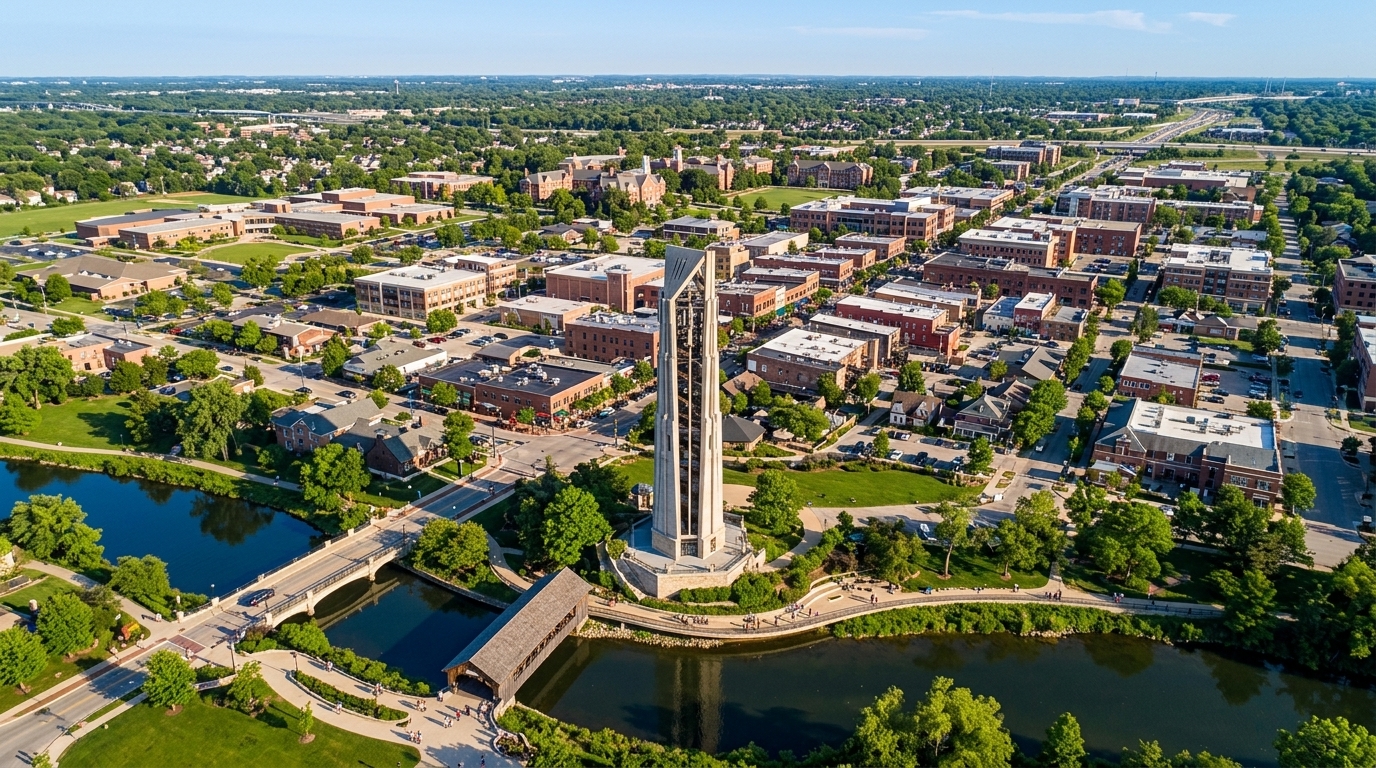
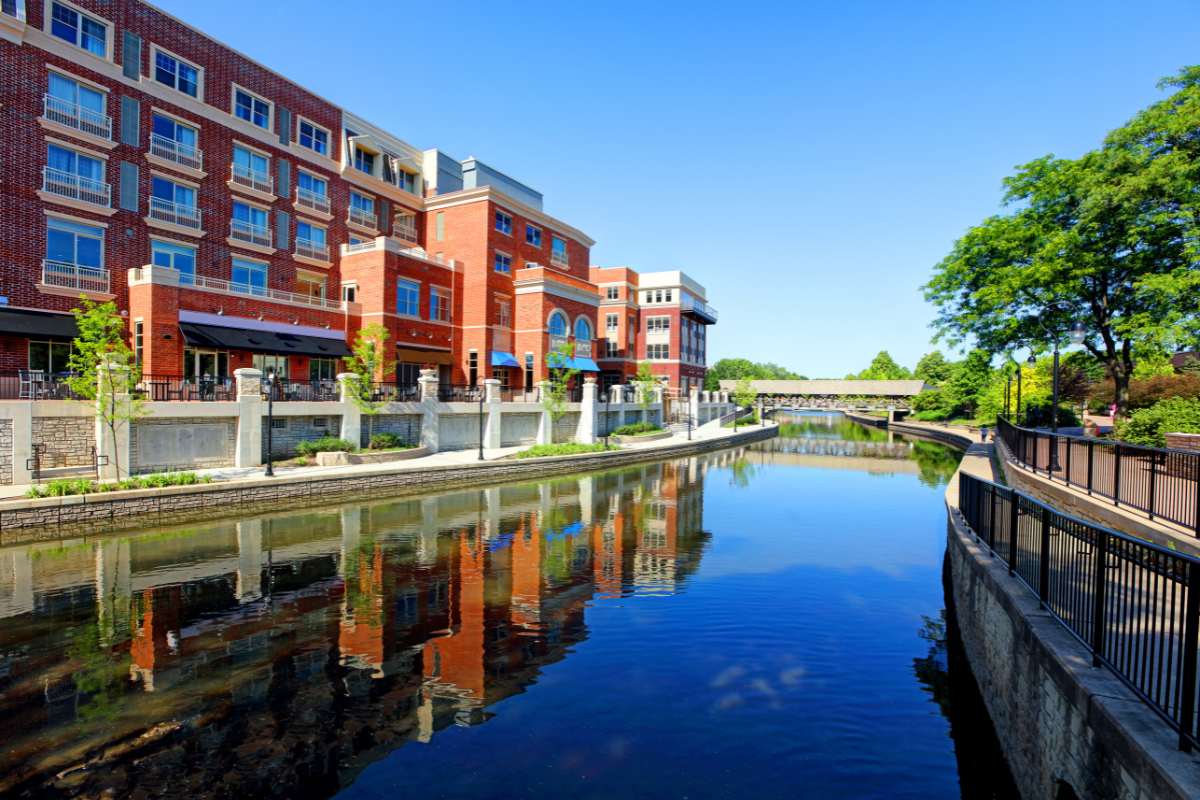
According to Walk Score's Downtown Naperville data, the downtown neighborhood scores 77 — genuinely Very Walkable — making it the clearest case for car-free daily life in the city. The anchor of that walkability is the Naperville Riverwalk, described by the City of Naperville as the community's "crown jewel" — a 1.75-mile brick-paved path built by residents in 1981 along the DuPage River, featuring covered bridges, fountains, and public art that has become one of the Midwest's most recognized pedestrian landmarks. According to the Downtown Naperville Alliance, the pedestrian-friendly historic downtown offers over 100 shops, spas, and restaurants in every direction — including both nationally known brands and the independent businesses that give the district its character. Naper Settlement, the 13-acre outdoor history museum with 30 historic buildings and costumed interpreters, sits steps from the Riverwalk, making it accessible entirely on foot from most downtown addresses. The BNSF Metra commuter rail connects downtown Naperville to Chicago's Union Station in approximately 40 to 60 minutes — making the walkable downtown simultaneously one of the city's best pedestrian environments and its strongest commuter hub.
The Riverwalk Trail Network and Citywide Pedestrian Infrastructure
Naperville's pedestrian infrastructure extends well beyond the downtown corridor. According to the Naperville Park District, the city maintains over 70 miles of trails — including connected trails and loop trails within individual parks — accessible to walkers, runners, cyclists, and skaters throughout the community. This trail network connects residential neighborhoods to parks, schools, and community facilities across a city that is genuinely larger than its walkable downtown suggests. According to Washington State University's 2026 walkability research, trail access and pedestrian-friendly environments produce the same measurable physical activity and health benefits as traditional commercial walkability — lower obesity rates, better cardiovascular health, and stronger community connection among residents. For Naperville neighborhoods outside the downtown core, the 70-mile trail system is the primary daily pedestrian infrastructure, and it is one of the most extensive in the Chicago suburban metro.
Benefits of Walkable Living in Naperville
According to The Climate Reality Project's walkability research, residents of walkable communities spend significantly less on transportation, have measurably lower rates of obesity and diabetes, and report higher overall wellbeing and community connection. For Naperville residents whose daily life is centered on downtown — whether through the Riverwalk morning walk, the Metra commute to Chicago, or the evening restaurant and entertainment circuit along Washington Street and Jefferson Avenue — the walkability benefits are delivered consistently throughout the week rather than just on weekends. According to the Walk Score research database, each additional Walk Score point adds between $700 and $3,000 to a typical home's value — a relationship that is visibly reflected in Naperville's downtown residential premium relative to comparable properties in more car-dependent neighborhoods elsewhere in the city.
Naperville's Walkability Trajectory
Naperville's investment in pedestrian-priority development is ongoing. The Riverwalk 2031 Master Plan, referenced by the City of Naperville, outlines projects to celebrate the Riverwalk's 50th anniversary and the city's bicentennial — ensuring the downtown pedestrian infrastructure that defines Naperville's character continues to develop. The Century Walk public art program — with over 40 works woven through the downtown corridor — reflects the city's consistent commitment to the pedestrian experience as a community priority rather than an afterthought. For homebuyers who prioritize walkability as a lifestyle factor, Naperville's downtown offers a genuinely rare combination in the Chicago suburban market: the pedestrian quality of an established historic downtown paired with the school district, community character, and commuter rail access that define one of Illinois' most consistently desirable places to live.
Get more insights on homeownership costs on Life in Naperville. Have questions about buying in Naperville? Connect with Ruth Sheahan today.
Sources: walkscore.com — Naperville, walkscore.com — Downtown Naperville, walkscore.com — Walk Score Methodology, honestcasa.com — Walk Score Explained 2026, naperville.il.us — Naperville Riverwalk, napervilleparks.org — Riverwalk and Trail Network, downtownnaperville.com — Downtown Naperville Alliance, Washington State University — Walkability and Physical Activity 2026, climaterealityproject.org — Benefits of Walkable Cities, walkscore.com — Walkability Research