How to Join Community Theater or Volunteer Backstage in Naperville
There’s a place for you in Naperville’s theater community—on stage, behind the scenes, or welcoming guests. Explore local groups and discover ways to audition, build sets, help wit...

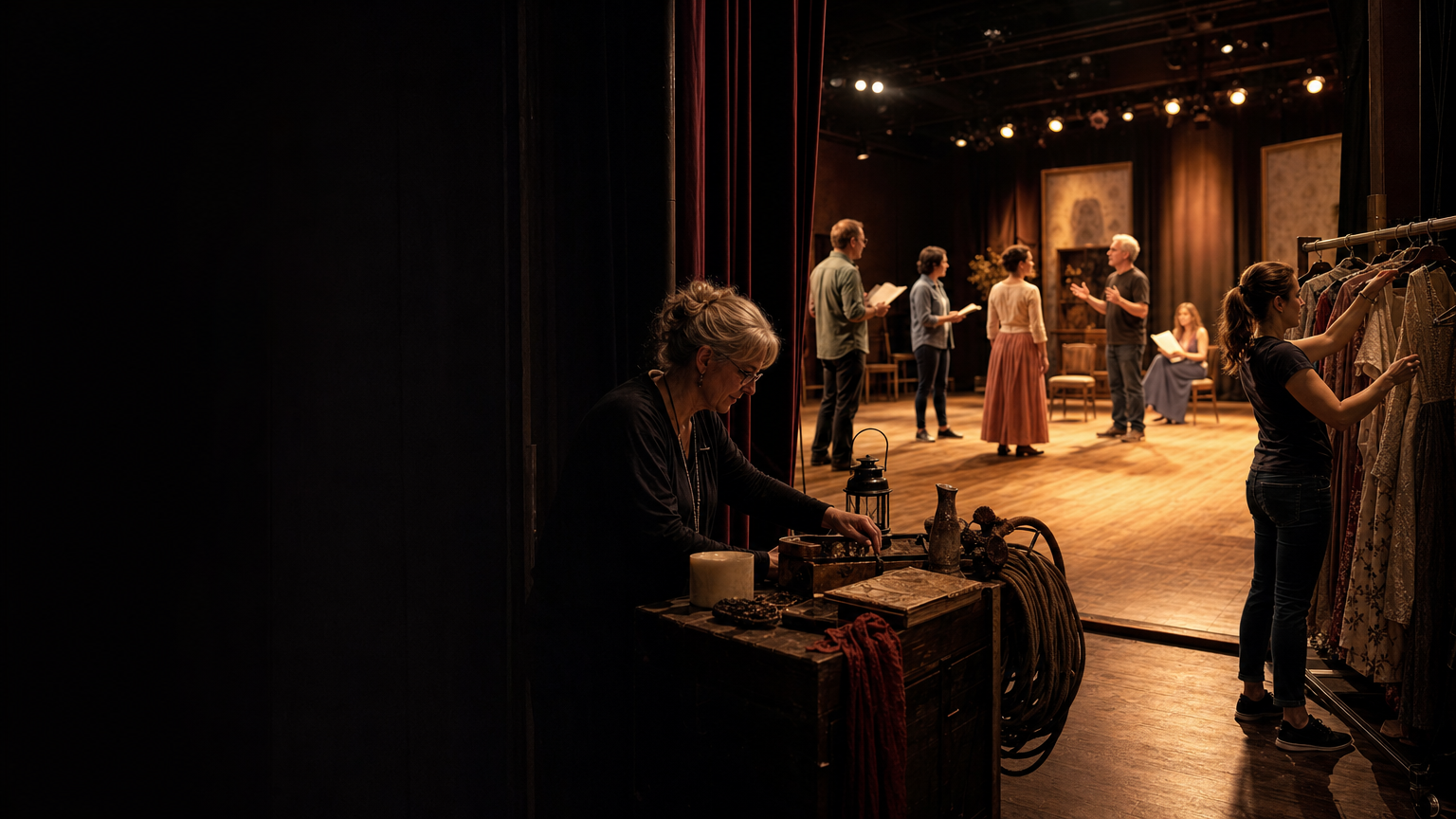
Naperville · Community Photo
There’s a place for you in Naperville’s theater community—on stage, behind the scenes, or welcoming guests. Explore local groups and discover ways to audition, build sets, help with costumes, or support a production from backstage.
Find your role
in Naperville theater
On stage, behind the curtain, or welcoming the audience—local theater brings neighbors together.
Bring the story to life
- Perform: Act, sing, or dance in a local production.
- Explore auditions: Look for open community casting opportunities.
- Discover youth theater: Kidz Kabaret offers a non-audition children’s theater program.
Make the show possible
- Before the show: Build sets, sew or repair costumes, and organize props.
- During the show: Support backstage movement or operate sound and lighting.
- Welcome the audience: Help with ticket sales, concessions, or ushering.
- After the show: Dismantle sets and repair and store costumes and props.
- Beyond the stage: Contribute office support, marketing, grant writing, or fundraising.
Meet the theater community
Summer Place Theatre
Volunteer-supported community theater with summer performances at Naperville Central High School Auditorium.
BrightSide Theatre
Entertainment and educational programs serving the western suburbs, with performances at The Madden Theatre in Downtown Naperville.
Magical Starlight Theatre
A Naperville Park District program bringing community actors and production staff together for family-oriented theater.
Community Players
Spring and fall productions; meeting location at 20 N Center, Naperville.
Kidz Kabaret
A children’s theater company with the vision “Every Child Center Stage.”
Welcome! Whether you dream of stepping onstage, prefer helping behind the scenes, or want a fun, non‑audition program for teens, this page lets you explore each option.
Pick a path that matches your interest now; you can always try another later. Detailed info on audition prep, rehearsal schedules, and callbacks lives in the dedicated tabs, so you can focus on the role that feels right and grow.
Four routes give varied entry points for actors.
Summer Place Theatre: Open auditions welcome experienced performers and beginners; auditioning does not guarantee casting.
Community Players: Open‑door policy invites all skill levels; casting not assured after audition.
Magical Starlight Theatre: Offers lead and ensemble parts to adults and youth 9 years+ in fourth grade; audition does not guarantee a role.
Center Stage Players: Auditioned troupe for ages 16 through adult; casting not guaranteed.
Kidz Kabaret in Naperville offers a non‑audition youth route that welcomes children, whether they have performed before or are new to theater.
This format skips the try‑out process, giving families a way to enjoy stage fun.
Consider whether your child prefers a no‑audition setting before selecting a program, ensuring a fit for their interests.
It provides a welcoming environment where beginners can try roles, learn basics, and grow confidence among peers.
Choose Your Path Forward
Review the options presented and select the route that best aligns with your interests. Once you’ve decided, reach out to the appropriate organization to confirm current participation opportunities and verify eligibility before moving ahead. Taking this step ensures you have the most up‑to‑date information and a clear plan for involvement. You may also inquire about any upcoming informational sessions or volunteer gatherings that can provide further insight into the role’s responsibilities and community impact.
Begin by reading the audition notice for the specific production you want to join. Highlight each requirement—age range, side‑piece, monologue length, and deadline—then copy those points into your own personal checklist.
Next, rehearse the chosen material aloud, record yourself, and note any tricky moments. Warm up your voice and body each day, and gather any costume or prop items the notice mentions. Keep this prep focused on this show alone.
Read the production notice posted by BrightSide Theatre before selecting audition pieces for your role.
Vocal material: note required songs or style.
Script reading: see if a cold read is required for the role.
Movement component: any dance call or physical test.
Eligibility: verify age range, character, or residency.
Sign‑up method: follow the notice’s instructions for slots.
Ask the organizer if accompaniment tracks, script access, or any required documents are unclear.
Magical Starlight Theatre’s September audition for Anastasia shows a concrete process, not a universal rule.
Prepare a vocal piece for the role.
Prepare a monologue from the script.
Remain for the movement or dance audition afterward.
Practicing the material aloud and rehearsing transitions between singing, speaking and movement improves confidence.
This audition accepted both registered slots and walk‑ups, but verify the production notice before assuming the same arrangement elsewhere.
The Magical Starlight Theatre audition is held on the upper level of the Alfred Rubin Riverwalk Community Center, 305 W. Jackson Avenue, Naperville. Before you travel, double‑check that this address matches the registration instructions for the specific production you are auditioning for. Assuming the performance venue is also the audition site can lead to confusion, so verify the location and any entry requirements in advance. Check the email for updates.
Final Readiness Check
Take a moment before your session to confirm that you have the right material ready, double‑check the production’s instructions, verify any registration or ticket details, and write down any remaining questions for the organizer. Trust the effort you’ve invested, approach the experience with confidence, and enjoy sharing the preparation you’ve crafted. Consider rehearsing a brief run‑through, note any timing cues, and ensure your technology is set up correctly. You’re ready to shine.
Before you sign up, weigh the total time your production role will require against work, school, caregiving and transportation needs.
Rehearsals often span several evenings and weekends, so be sure those slots fit your existing schedule.
Technical preparation—set building, lighting cues, costume fittings—adds extra days that may conflict with other obligations.
Performances typically run for a set number of shows, each demanding punctuality and travel time on the day of the performance.
When joining Magical Starlight Theatre’s production of Anastasia, remember that tech week is fully mandatory. All technical rehearsals and the final performances will be held in the Naperville Central High School Auditorium. Cast members should check their calendars for these critical dates, not just the early rehearsal period. Confirm the complete production calendar before committing to ensure smooth technical preparation and performance attendance and to avoid scheduling conflicts.
Backstage Availability
Backstage duties shift as a production moves from pre‑production through building and rehearsals, into technical preparation, and finally the run. Hours are not set in stone; each phase may call for different lengths and shift patterns. Stage management usually requires attending most rehearsals, the intensive tech period, and every performance. Clarifying these points helps align expectations before committing to a season.
When does a specific set, costume, or technical task require my presence?
Does the need include performance evenings?
How should I report any scheduling conflicts?
Commitment Checklist
Before you commit to a role, follow this quick checklist: 1️⃣ Review the production calendar to see all rehearsal and performance dates. 2️⃣ Spot any personal or academic conflicts early. 3️⃣ Factor in travel time and logistics. 4️⃣ Speak openly with the organizer about your availability. 5️⃣ Confirm the fit before saying yes. Doing this helps ensure a realistic commitment.
Post‑audition steps
After your audition, promptly check the email or text you were instructed to monitor. If you receive a brief note saying “we’d like to see you again,” treat it as a callback and respond with availability. A message stating “you have been cast” is a confirmed offer and should be acknowledged with gratitude. Follow the production’s exact reply format, keep your schedule flexible, and confirm any required paperwork within the indicated timeframe.
Callback Tips
Receiving a callback invitation can feel exciting, as seen with Magical Starlight Theatre’s Anastasia production, where callbacks are offered when needed. Treat it as a step in the audition process, not a guarantee.
Read carefully: note every instruction in the invitation.
Confirm attendance: reply promptly to say you can be there.
Ask about material: request exactly which songs or scenes to prepare.
Verify location: double‑check the room or address where you should report.
Always follow the specific announcement or contact method the production provides. If the instructions are unclear, review them closely and note any questions before reaching out for clarification.
When you receive a role offer, read the full terms, flag any participation concerns, and reply—acceptance or decline—exactly through the channel the production requested.
Keep a copy of the written offer, confirm receipt promptly, and ensure your response meets any stated deadline to avoid miscommunication.
Next Steps
If you were not cast, view it as a chance to explore other involvement. Consider auditioning for a future production when dates are announced. You may also ask about set, costume, or technical volunteer opportunities specific to the current show. Send a brief inquiry that names your interests, relevant experience, and any questions about duties or guidance. Remember, this message expresses interest only; it does not guarantee an assignment or guaranteed feedback.
Contact Magical Starlight Theatre
Have a question about a Magical Starlight Theatre production? Let us know which show you’re interested in and what you’d like to learn. Our team at the Naperville Park District is ready to help. Email info@napervilleparks.org or call (630) 848-5000 for details, tickets, or program information. Our staff can also provide schedule times, age recommendations, and accessibility options. Feel free to reach out any weekday between 9 a.m. and 5 p.m.
Every Thursday — local news, events, deals, and new listings. Free forever.
Backstage role | Core responsibilities | Time commitment | Skills and experience | Working expectations |
|---|---|---|---|---|
Stage Management: Stage Manager / Assistant | Coordinates rehearsal schedules, tracks blocking, maintains communication between the director and crew, and calls lighting and sound cues during performances. | High. Attendance at all or most rehearsals, intensive tech week rehearsals, and all performances makes this an ongoing commitment across rehearsal and performance phases. | Intermediate to advanced. Strong organization, leadership, and communication skills are required to coordinate rehearsals and maintain communication throughout the production. | Tech week brings technical elements together with live acting. Patience is essential while cues are calibrated, timing is refined, and rehearsals pause for technical adjustments. |
Lighting & Sound Operation: Board Operators | Hangs and focuses lighting instruments, programs sound files and cues, and executes live design cues during performances. | Medium to high. Required attendance includes final technical rehearsals and all performance dates, when lighting and sound cues are integrated with the production. | Beginner to intermediate. Basic technical aptitude is helpful, and training is frequently provided for volunteers. | Follow safety protocols around rigging and backstage blackout conditions. Keep headset communication focused strictly on show flow, and remain patient during technical stop-and-go adjustments. |
Set Construction & Painting: Scenic Crew | Builds scenery, including platforms, flats, and props, using shop tools. Paints and finishes physical backdrops. | Variable and project-based. Work takes place mostly during pre-production and build weekends, with scenery removal, known as strike, after closing. | Beginner to advanced. Willingness to learn is important; carpentry and painting experience are preferred. | Strict adherence to safety protocols is mandatory, particularly when using power tools in the scene shop. Keep backstage lanes clear of clutter to prevent injuries and missed cues. |
Costume & Makeup Design / Wardrobe | Pulls, alters, or constructs garments; organizes quick-change booths; and applies character makeup and styles hair. | Medium. Responsibilities include fittings and pre-production tailoring, with dressing and quick-change duties during performances. | Beginner to advanced. Basic sewing or styling skills are a plus, but training is often available. | Treat costumes, props, and personal items with care. Props stay at the theater and are never taken home. Maintain quiet backstage communication and clear passageways. |
Tech week is when lighting, sound, scenery, and costumes come together with live acting. Rehearsals become focused on coordinating these elements, with repeated stops as cues are calibrated and timing is worked out. Patience matters: a pause in the action is part of getting the production ready.
Expect long, intensive rehearsals rather than an uninterrupted run of the show. Commitments vary by production phase and assignment. Stage management requires attendance at all or most rehearsals and every performance, while lighting and sound operators are needed for final technical rehearsals and all performances. Consider that full commitment when choosing a role, not just the preparation work.
Safety comes first. Follow the theater’s safety protocols around scene-shop power tools, rigging, and backstage blackout conditions. Keeping passageways clear of clutter helps prevent both injuries and missed cues.
Keep communication quiet and purposeful. Use whispered communication backstage, and reserve headset channels for show flow. Whether you are moving scenery, helping with wardrobe, or operating cues, these shared habits support coordinated work during performances.
Respect the production’s belongings. Handle costumes, props, and personal items carefully. Props stay at the theater; they are never taken home. Care for materials and clear backstage lanes are responsibilities shared across the crew, not just by the people assigned to scenery or wardrobe.
Behind-the-scenes volunteering connects Naperville residents through shared creative work. Summer Place Theatre, BrightSide Theatre, and Center Stage Theater are among the local organizations sustained by community participation. Working toward a production offers hands-on experience while helping support the area’s cultural life.
Prior theatrical experience is not essential for every assignment. Scenic work welcomes a willingness to learn, lighting and sound volunteers frequently receive training, and costume or wardrobe work can accommodate beginners as well as experienced contributors. Sewing, styling, carpentry, and painting skills can all contribute.
Beyond the finished show, volunteering creates opportunities for close social bonds and shared accomplishments. Those connections strengthen neighborhood ties while supporting the broader DuPage County and Chicagoland arts community.
No. Summer Place Theatre and Community Players welcome auditionees with any level of experience, including people trying theater for the first time. You do not need an established acting background to put yourself forward.
Open auditions are an opportunity to be considered, rather than a guarantee of casting. Read the production’s audition instructions before attending, and ask what preparation is expected so you can arrive ready to participate.
Expect an ongoing rehearsal commitment rather than occasional drop-ins. Summer Place Theatre rehearses on weekday evenings and sometimes weekends, with rehearsals beginning before the production opens. Ask for the production calendar before committing, and discuss any conflicts during the audition process.
Technical rehearsals and performances are mandatory at Magical Starlight Theatre and BrightSide Theatre. Tech week brings the production’s elements together, so check that your availability covers that final rehearsal period as well as the performances—not just the earlier rehearsals.
Costs depend on the organization and program. Actors at Summer Place Theatre and Community Players participate as volunteers; they are not paid or provided housing. Community Players charges no membership fee.
Educational youth programs can have participation fees. The BrightSide Theatre Youth Project lists a $450 participation fee, with sibling discounts available. Before registering, confirm the current program fee and ask what it includes. Do not assume an adult volunteer production and a youth educational project follow the same payment structure.
Choose a pathway that matches your interests: an open audition, a non-audition youth program, or an inquiry about helping behind the scenes. Summer Place Theatre and Community Players offer beginner-friendly audition opportunities. When contacting a group about backstage participation, describe your interests and availability and ask about current needs.
For children, Kidz Kabaret offers a non-audition route through Fair Lady Productions in Naperville. It welcomes students regardless of experience, and every child receives a speaking part and a supporting role. This provides an alternative to competitive auditions for young newcomers.